Reformer Pilates

Strength, with support.

A spring-supported carriage creates resistance, feedback and room to move with control.

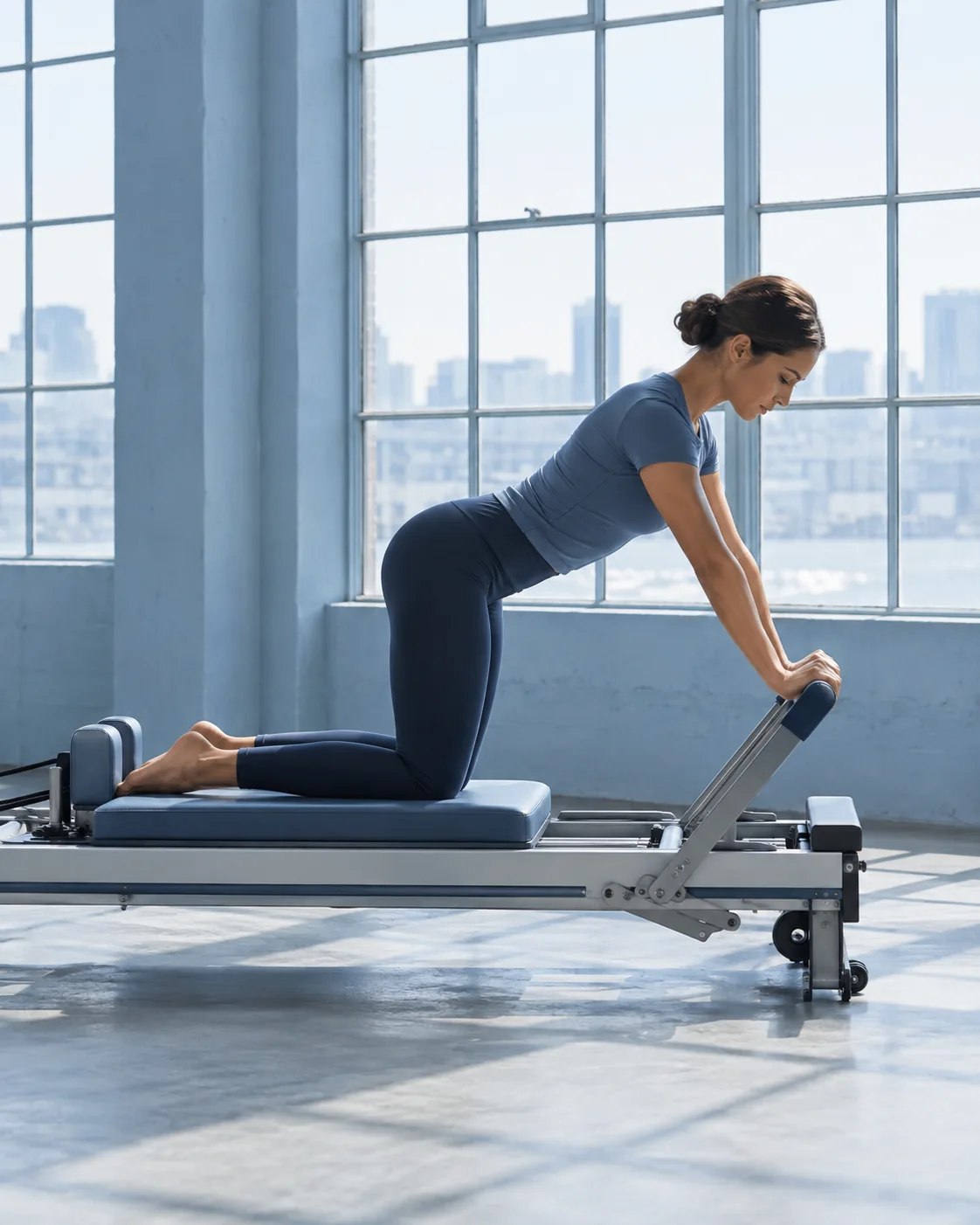
Woman controlling a small kneeling movement with both hands supported on a reformer footbar.

Format

Spring-supported apparatus

Pace

Controlled, with adjustable resistance

Starting point

Choose an introductory level if the apparatus is new to you.

Reformer Pilates uses a moving carriage, springs and straps to make effort adjustable and visible. The apparatus does not do the movement for you; it gives clear feedback while you practise strength, balance and coordination.

A useful starting point is understanding the setup and simple movement patterns before adding range or resistance. Wear comfortable clothing that lets you move, bring water, and arrive with time for an introduction to the apparatus.

No previous apparatus experience is assumed in a Beginner-labelled session. Check the published level and preparation guidance when booking becomes available.

Get to know the apparatus.

A closer look before you step into class.

The carriage gives you feedback.

The moving platform is called the carriage. Its travel makes changes in pace and control noticeable. The aim is to understand the movement you have been given, including how it begins and returns, rather than simply moving the carriage as far as possible.

Springs change the task.

Spring settings work with the exercise, body position and intended movement. A heavier setting is not automatically the right progression. Ask the teacher to explain the setup and wait for their guidance before making an adjustment.

Learn the transitions, too.

Getting onto the apparatus, changing position and finishing an exercise are part of the practice. Give those moments your attention. An introductory session should leave space to get familiar with the carriage, footbar and straps before you are expected to move through a sequence.

Before you begin

A few essentials. Room for questions.

Comfortable movement clothes and water. Equipment requirements and class duration will accompany the programme details when booking opens.

The first-visit guide

Questions, considered

Do I need previous experience?

Not for classes labelled Beginner.

Is Beginner different from Reformer?

Beginner describes the level; Reformer describes the equipment. You can be new to Pilates and choose an introductory Reformer class. Read both the level and the format when comparing sessions.

Do I need to be flexible to begin?

You do not need to arrive with a particular range of movement. Choose an introductory level and ask the teacher to help you understand the starting position and available variations.

What does ‘control’ mean in a Pilates class?

It means paying attention to how a movement starts, travels and finishes. That may involve slowing down, making the movement smaller or following one instruction at a time. It does not mean holding your breath or making every muscle tense.

What if I am returning after a break?

You can choose a foundational level again. Tell the teacher what feels familiar and what you would like explained. Previous experience does not oblige you to start at the same pace or level as before.

What should I bring?

Comfortable clothing that stays in place as you move, water and your questions. Check the final class guidance for footwear and equipment requirements.

Can I book a class yet?

Booking is not open on this website. You can explore the practices and prepare for your first visit; a sample schedule does not create a reservation.